


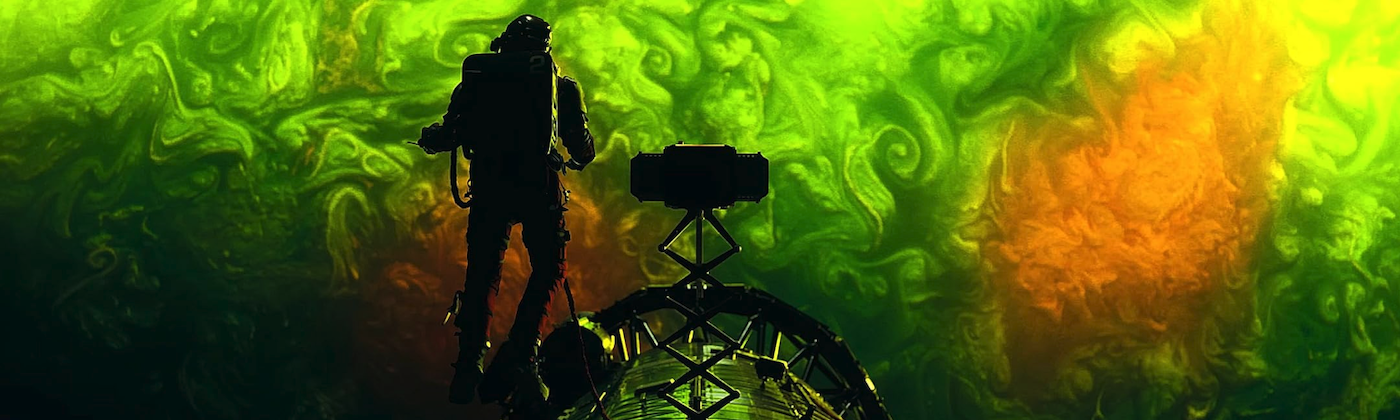
A film adaptation of Project Hail Mary - the space sci-fi best-seller from Andy Weir that set the Internet on fire back in 2021 - could not have come at a better time. In an ever-depressing world of war perpetuated by increasingly autocratic regimes, what we need is some hope - no matter where it comes from. So if it is served up in the form of a two-and-a-half-hour galactic adventure promoting the power of friendship against insurmountable odds, you know what? I’m gonna take it.
It also helps that Project Hail Mary feels like a genuine big-screen event - the first one of 2026, in fact. Lavish effects and sincere messages aside, it’s got a cast capable of carrying its lofty ambitions along. Alongside the ever-dependable Ryan Gosling and German actress Sandra Hüller (Zone of Interest, Anatomy of a Fall), there are also step-up roles for The Bear actor Lionel Boyce and renowned puppet designer James Ortiz.
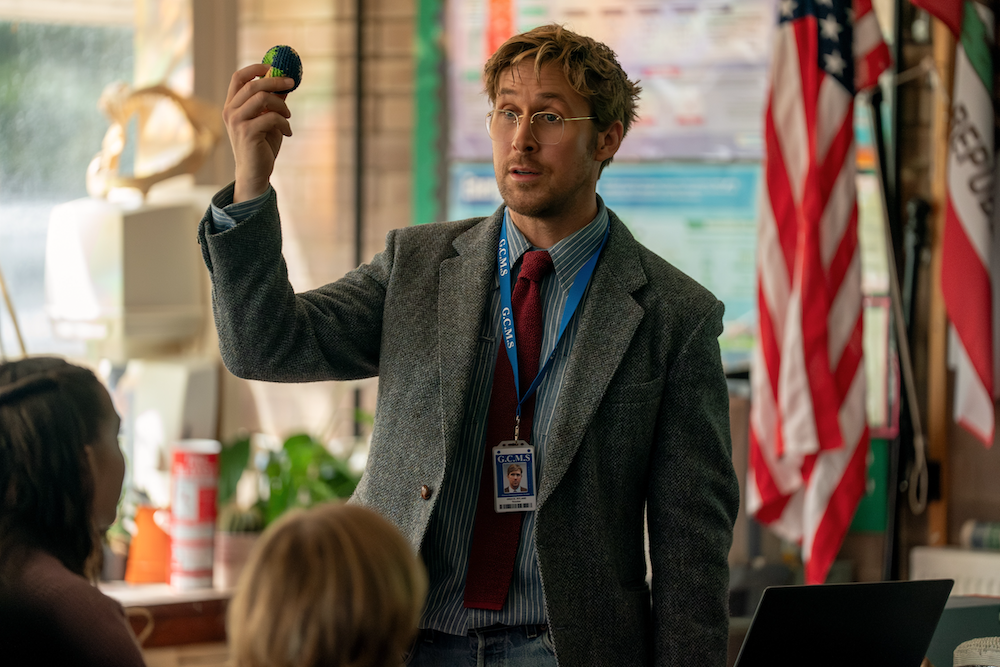
Gosling plays the lead as Ryland Grace, a middle-school science teacher turned astronaut. He awakes from deep sleep aboard a spaceship at the start of the movie, completely unaware of who he is or what his surroundings entail. Gradually, we learn that the Sun is dimming, all life on Earth is threatened with annihilation from the looming death of the planet, and Grace is part of a crew-of-three mission—the literal ‘Project Hail Mary’ of the title—to save it.
How exactly Grace has gotten here - with his crewmates tragically dead in their pods for company - is the film’s initial question, one that is eventually answered through a series of flashbacks. The ‘why’ of his situation is simple. Thanks to his pre-teacher days as a brilliant biologist, he is headhunted by the Project Hail Mary’s leader, Eva Stratt (Hüller), as a required researcher to complete its final critical findings - all under the watchful eye of no-nonsense security officer Carl (Boyce). It is also revealed that through Grace’s previously debunked papers, Stratt’s team has not only discovered a new form of cell life, but also the reason behind the dying Sun: ‘astrophages’, lifeforms capable of living on stars, and draining their energy as they feed from them.
With Earth’s environment just years away from complete collapse, the project’s leaders put together a last-ditch, certain-death mission: use the astrophages as fuel to send a crew on a one-way trip to Tau Ceti - the one star in the galaxy unaffected by the astrophage threat. There, Grace must discover why it survives unblemished, and send any cure he can derive from it back to Earth, his own life expendable. Worse still, with the death of his crewmates in the present, he now has to do it all alone. Or so he thinks.
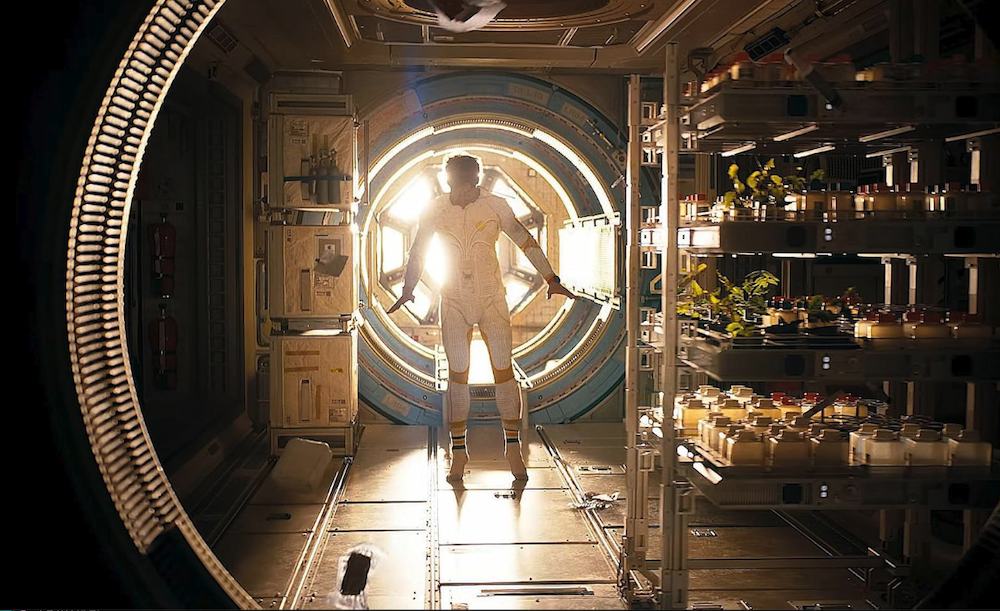
Keeping both flashbacks and ‘present’ scenes in lock step is no easy feat for any film. However, it is a task astutely handled here by joint directors Phil Lord and Christopher Miller, who deliver a seamless cut that fills in the plot details with no loss of pace. It also helps that the art for Hail Mary’s space scenes - from Grace’s ship to deep space and the planets and stars he encounters - is staggeringly beautiful. With both a tight plot and visual production combined, there’s always something to seize your attention.
On those visuals: the sheer colour and detail are immense. Space feels both awe-inspiring and overwhelming. Grace’s ship’s interior also blinks vividly with an incredible array of screens, consoles, and controls, evoking the kind of sensational set design not seen since Alien. Other ideas are borrowed from other classic sci-fi - 2001, Silent Running, Black Hole - but it’s all interstellar eye candy at its finest. In comparison, it’s a far cry from the cold, grey eeriness of First Man, another space-themed Gosling project from a few years back. And it all serves a critical purpose, too - not just to give the film’s first act its metaphorical blast-off, but also to evoke the enthralling wonder of space that its positive story eventually becomes so reliant on.
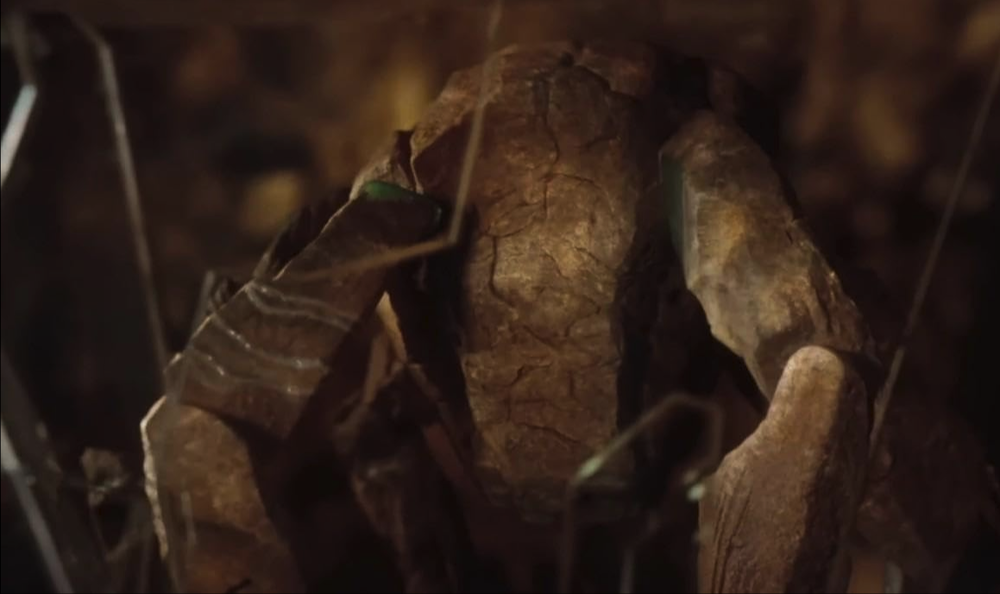
And then, in the second act, comes Rocky. Rocky (voiced by Ortiz) is the strange, almost crab-like creature whom Grace befriends as he approaches Tau Ceti. Grace soon finds that he’s got company in a huge, granite-like alien ship, one that suddenly grows extremely curious about him in an amusing segment. He finds Rocky not long after boarding the alien ship, and discovers - through a trial-and-error process of wrangling whatever tech he can find - that he can communicate with him. On top of that, it’s clear that Rocky himself is an intelligent creature on his own mission to save his own star, 40 Eridani, from disappearing, with his crew also suffering a similarly tragic fate to Grace’s.
With the two hailing the opportunity to work together to solve their joint problem, Hail Mary then transcends from being a mere space sci-fi to a much grander adventure - one that will take them through hardships, impossible science, and to a genuinely heartfelt conclusion about how strong bonds can form in the unlikeliest of circumstances.
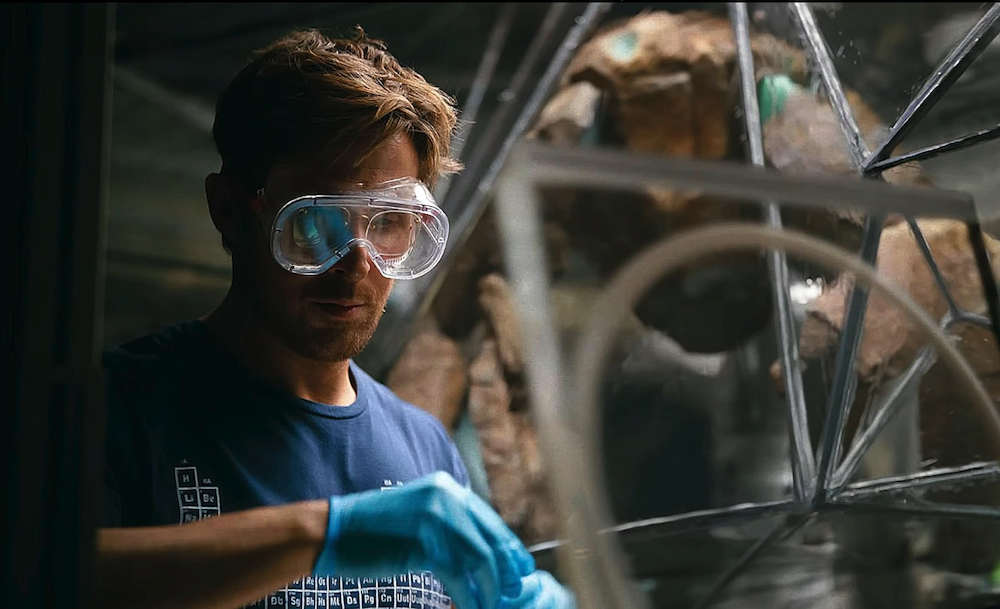
As Grace, Gosling serves up another likeable oddball hero, this time in the spaced-out California science nerd variety - all trailing sentences and off-kilter theoretical exclamations. But Rocky himself is the real star. His deadpan deliveries through Grace’s computerized speech translator - and the hamster-ball-like contraption he develops to survive in the deadly oxygen-rich atmosphere of his new human friend - make him an adorable little weirdo. If he owes his existence in this story to anything, it’s the good old 80s mascot movie. Older fans of these movies will likely have seen Rocky’s pratfalls in the films of their own youth - especially Flight of the Navigator, and maybe even Short Circuit from a simpler buddy-movie perspective. Younger viewers will be just as enamored by the little guy’s charm, and if anything, will likely be asking for the toys as well.
Ultimately, the combination of Grace and Rocky’s adventure, across increasingly impossible odds and ever more stunning space panoramas, ends up being the movie’s key strength. The later flashbacks that try to nail down Grace’s relationship with his fellow mission astronauts - as well as the shocking reason for why he went from mere project researcher to joining them in space - don’t quite have the same impact. The reason is simply down to screen time - there frankly just isn’t enough dedicated to either.
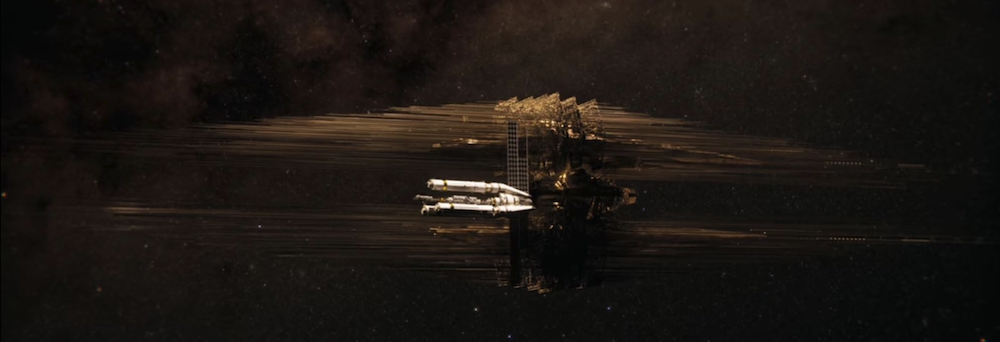
Ironically, in a film that puts so much emphasis on scientific discovery and the grand possibilities that await us in space, the science itself takes a backseat, too. Grace and Rocky’s quest to save their stars ends as a much more personal story than a scientific one. The astrophages, the real villain of the movie, aren’t given much of a background. There’s little exposition beyond the simple idea of ‘star bugs bad’. Which is all well and good if you want a space sci-fi movie that dazzles and excites, which this absolutely does. But not so much if you want some serious science to go with your fiction.
Still, does Project Hail Mary succeed as being 2026’s first real blockbuster? Absolutely. It is an excellent sci-fi movie that combines astounding visual work and an unusually touching saga of a close encounter with alien life. There’s a great chance we’ll be talking about it in December as one of the year’s best movies - possibly even one of the finest examples of the space-adventure genre, too. And best of all? It’s a story of hope for mankind - one that we need, now more than ever.

